48 hours inside the Citadel walls (and why you’ll want more)
The Citadel is a whole neighbourhood behind ten kilometres of ramparts. Here is how I show it to friends in two days, walking and cycling.
Mai · 3 October 2026 · 11 min read
The Citadel is a whole neighbourhood behind ten kilometres of ramparts. Here is how I show it to friends in two days, walking and cycling.
Mai · 3 October 2026 · 11 min read
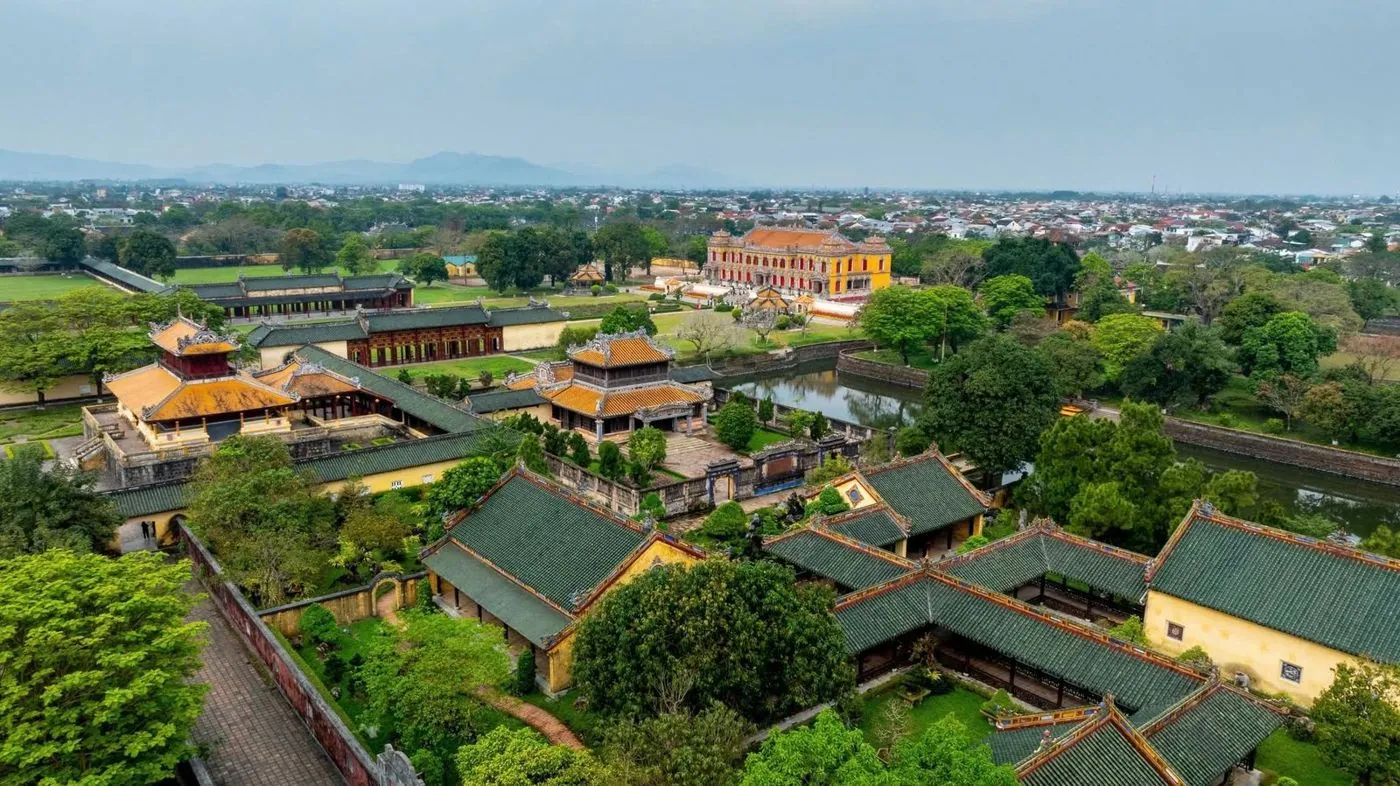
Most visitors see the Citadel in one hot afternoon: the big gate, the throne hall, a photo by the moat, back on the bus. I understand, but it breaks my heart a little. The walls hold the Imperial City, yes, and also lakes, gardens, schools, markets and whole streets of families. So this is my two-day plan, the one I use when friends come to stay.
before you go
Wear comfortable shoes and cover your shoulders and knees for the palaces and pagodas.
The Imperial City ticket is sold at the Ngọ Môn gate; buy it there or online on the official Huế Monuments site.
Start early: by 10 am in summer the stone courtyards are an oven.
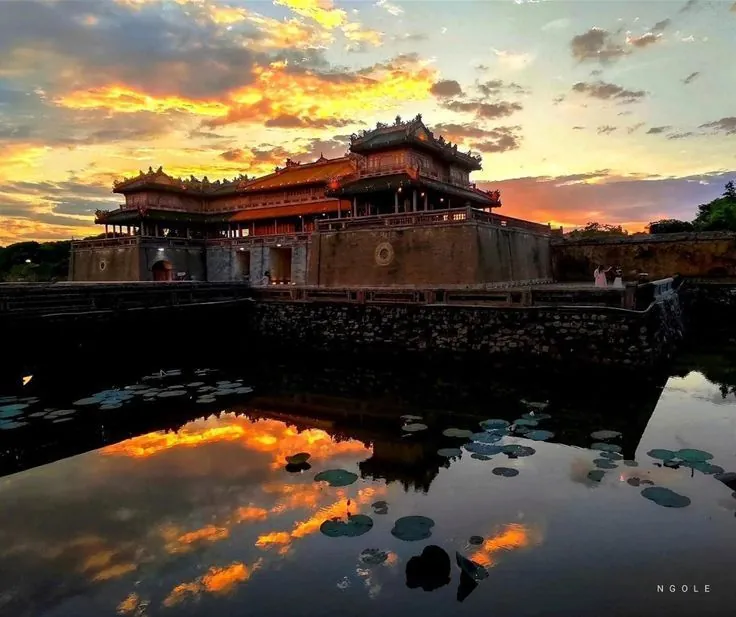
Start with a bowl of bún bò Huế near the Thượng Tứ gate (I explain my bún bò opinions here), then walk to the Ngọ Môn, the Noon Gate, built in 1833 under Emperor Minh Mạng. Five doors: the central one was for the emperor only. Today you can walk through the side doors and climb to the Five Phoenix pavilion above.
Straight ahead is the Thái Hòa palace, the hall of Supreme Harmony, finished in 1805, where the emperors held court. Behind it was the Tử Cấm Thành, the Forbidden Purple City, the emperor’s private world. Much of it was lost in the wars of the 20th century and is being rebuilt, piece by piece; I love seeing the restorers at work.
In the courtyard of the Thế Miếu temple stand the Nine Dynastic Urns, cast in bronze under Minh Mạng in the 1830s, each decorated with mountains, rivers, animals and plants of the country. They were made in Phường Đúc, the foundry quarter I wrote about here. Look for the tiger, the elephant and the boat.
Do as Huế does: eat, then rest through the heat. Come back out around 3.
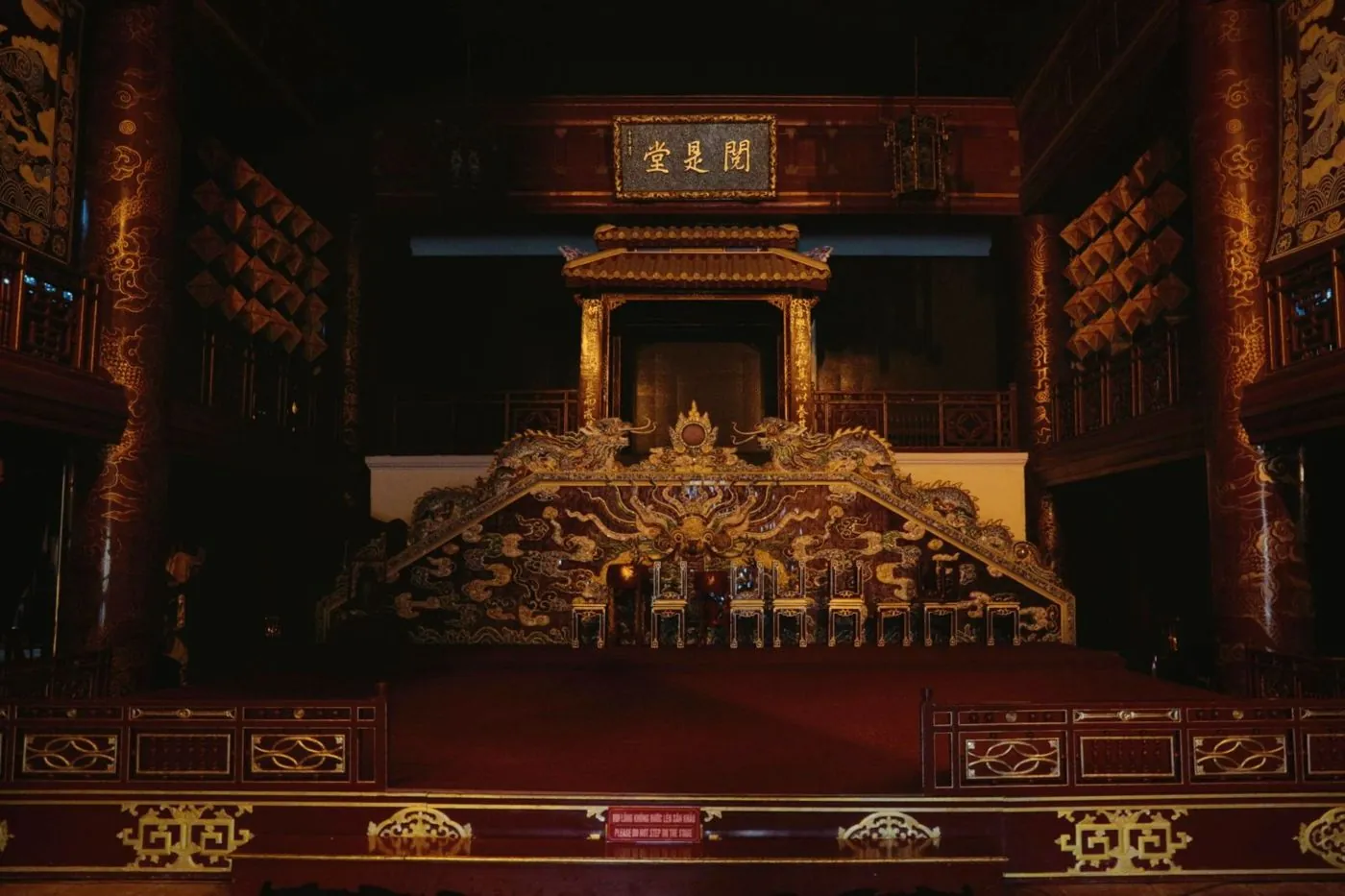
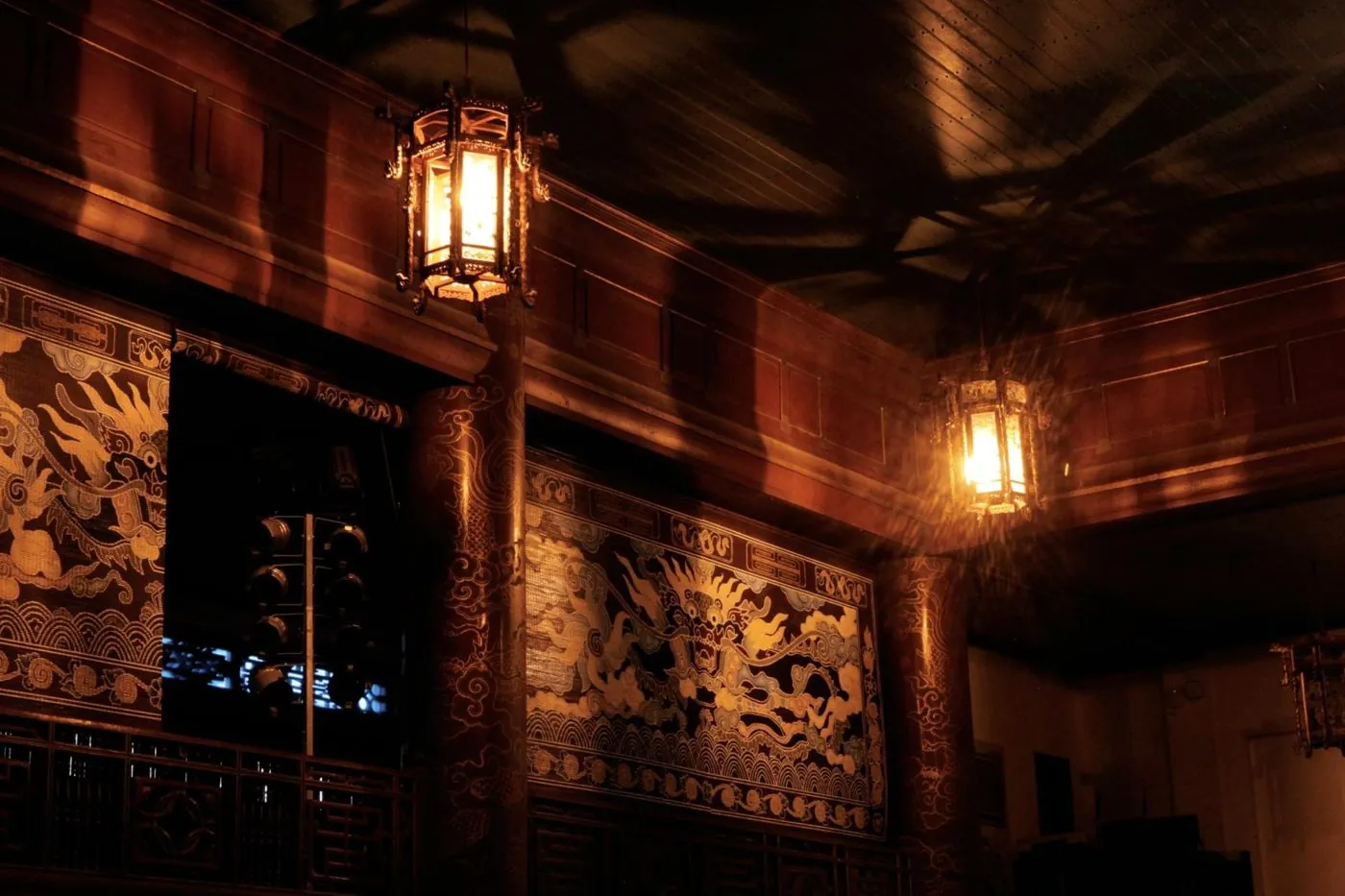
End the afternoon at Duyệt Thị Đường, the oldest royal theatre in the country, inside the Imperial City. There are two shows a day, each about 35 minutes: 10:00 and 15:00. Tickets are around 200,000–300,000 VND per person, on top of your Imperial City ticket. Nhã nhạc, the court music, has been on UNESCO’s list since 2003. Even if you know nothing about it, the sound of those instruments in that red-and-gold hall stays with you.
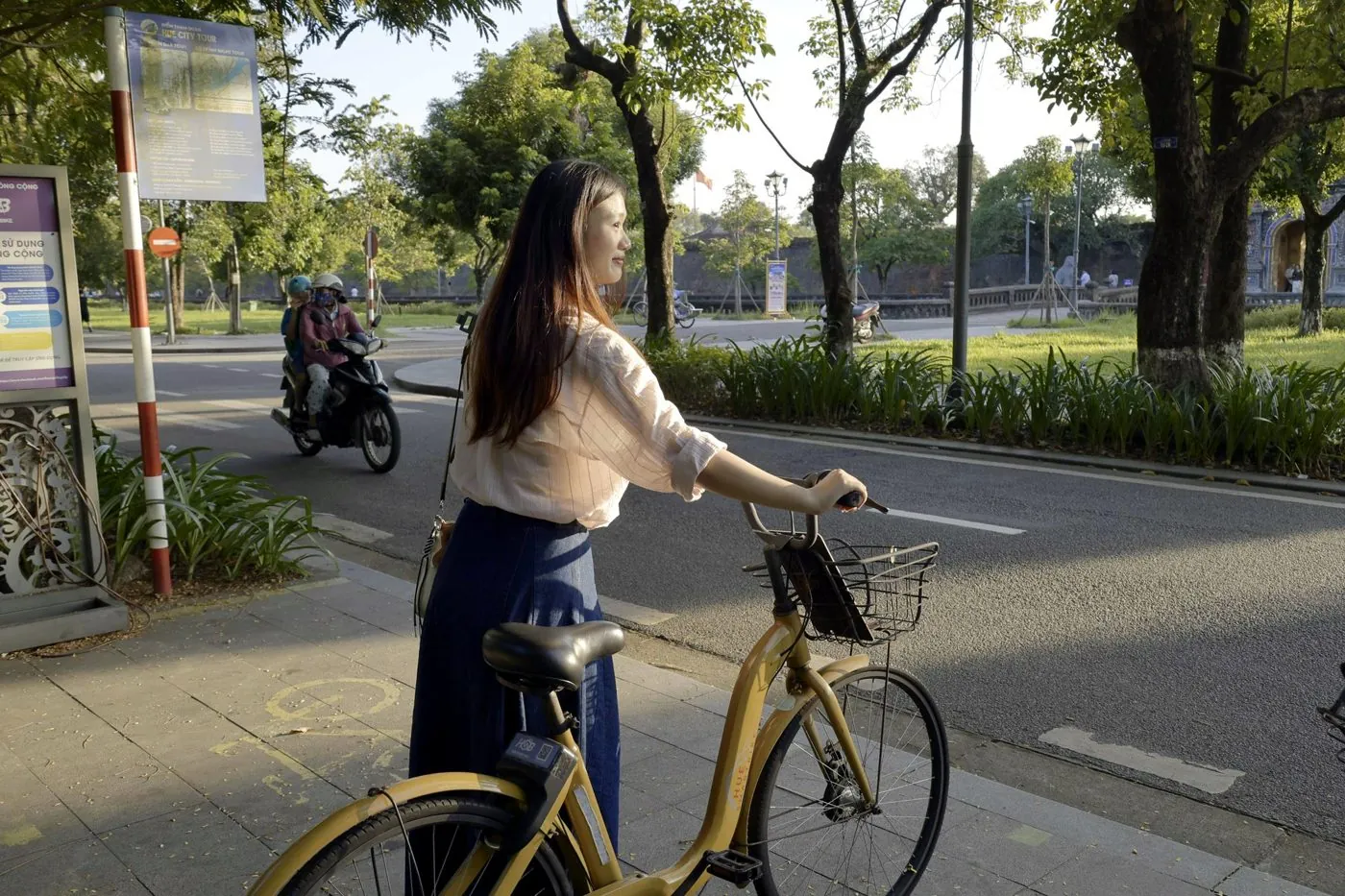
Rent a bicycle and ride along the inside of the walls at sunrise. The Citadel has ten main gates; I like to start at Thượng Tứ, the gate by the Flag Tower, and ride clockwise. You will pass ponds, vegetable gardens and the odd group doing tai chi.
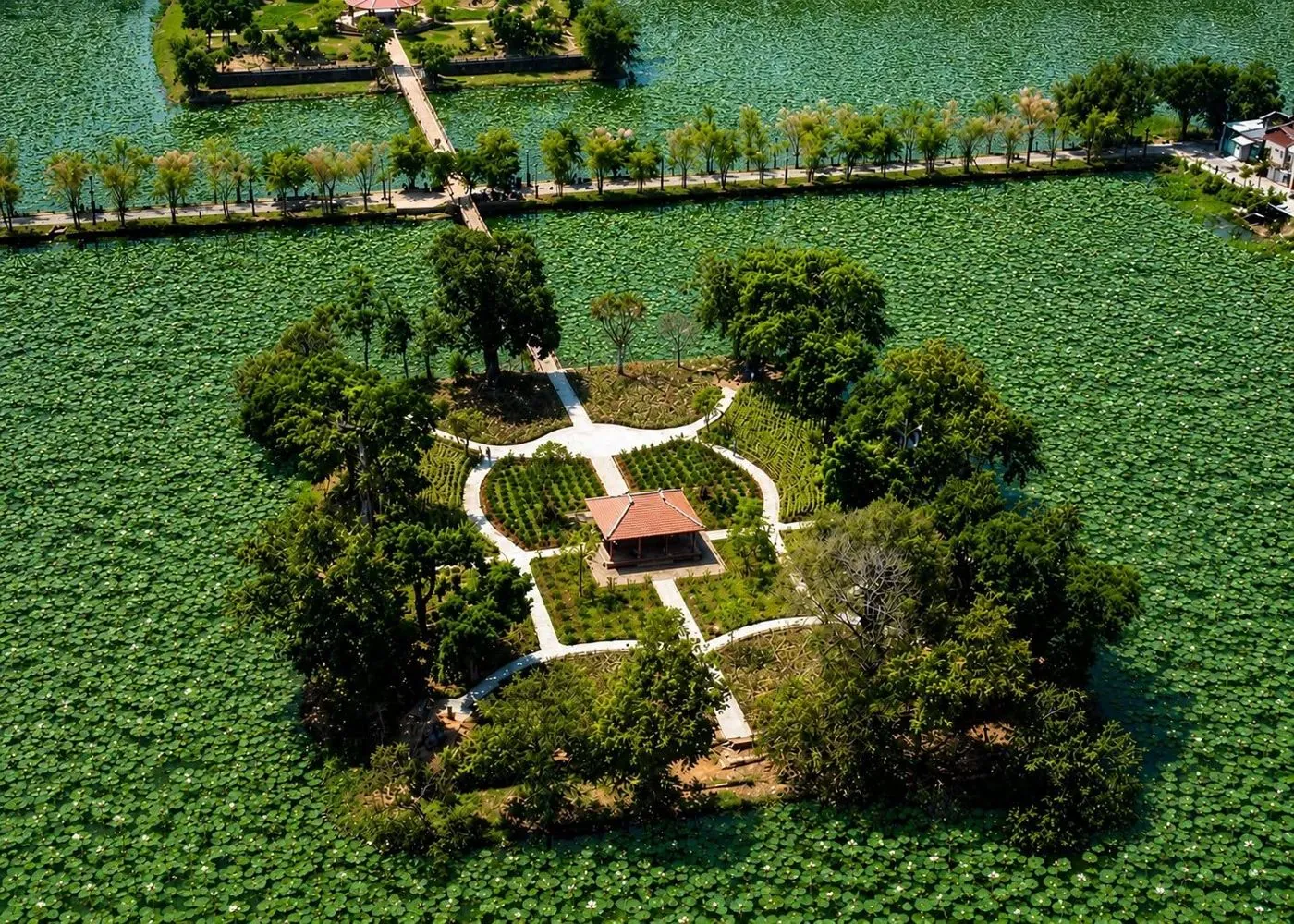
In the north of the Citadel, Tịnh Tâm lake was once a royal pleasure garden, with islands and pavilions. In summer it fills with lotus. Bring a book; sit under the trees.
The lanes between the big streets are where people live. You will see family altars through open doors, old garden houses behind walls, a few houses being restored. Stop for a cà phê muối, Huế’s salt coffee, which tastes much better than it sounds.
Just outside the walls, by the river, Đông Ba market has been the city’s market since the 19th century. Come for conical hats, sesame candy, mè xửng, and the food stalls at the back.
Walk to the Phu Văn Lâu pavilion on the riverbank and watch the light change on Trường Tiền bridge. Then dinner, and if you still have legs, the walking street on the other bank.
Two days covers the highlights. With a third, I would add the emperors’ tombs upriver and Thiên Mụ pagoda, and with a fourth a day trip from my trips page. Where to sleep? My honest stay guide covers places inside the walls and out.